
Tipping culture around the world is… complicated.
What counts as generous in one country might feel excessive in another. In many places across Europe, Asia, Africa, and South America, 10% is considered extremely generous—if tipping is expected at all. In Japan, for example, tipping can even be seen as disrespectful, while places like Australia and the UK build living wages into pricing, so tipping is more of a “thank you” than a requirement.
But in the United States?
Post-COVID, the norm has quietly (and aggressively) climbed to 18–20%… or higher.
You can’t buy a smoothie, pick up takeout, or breathe too hard without a tablet flipping around asking for 20%, 25%, or 30%.
So the big question becomes:
How do you know the right amount to tip?
Who should you tip?
And why do some jobs count as “service” while others don’t?
This conversation hit home for me just this past weekend during a little Vegas getaway with my older sister. Let’s just say… the debate got lively.
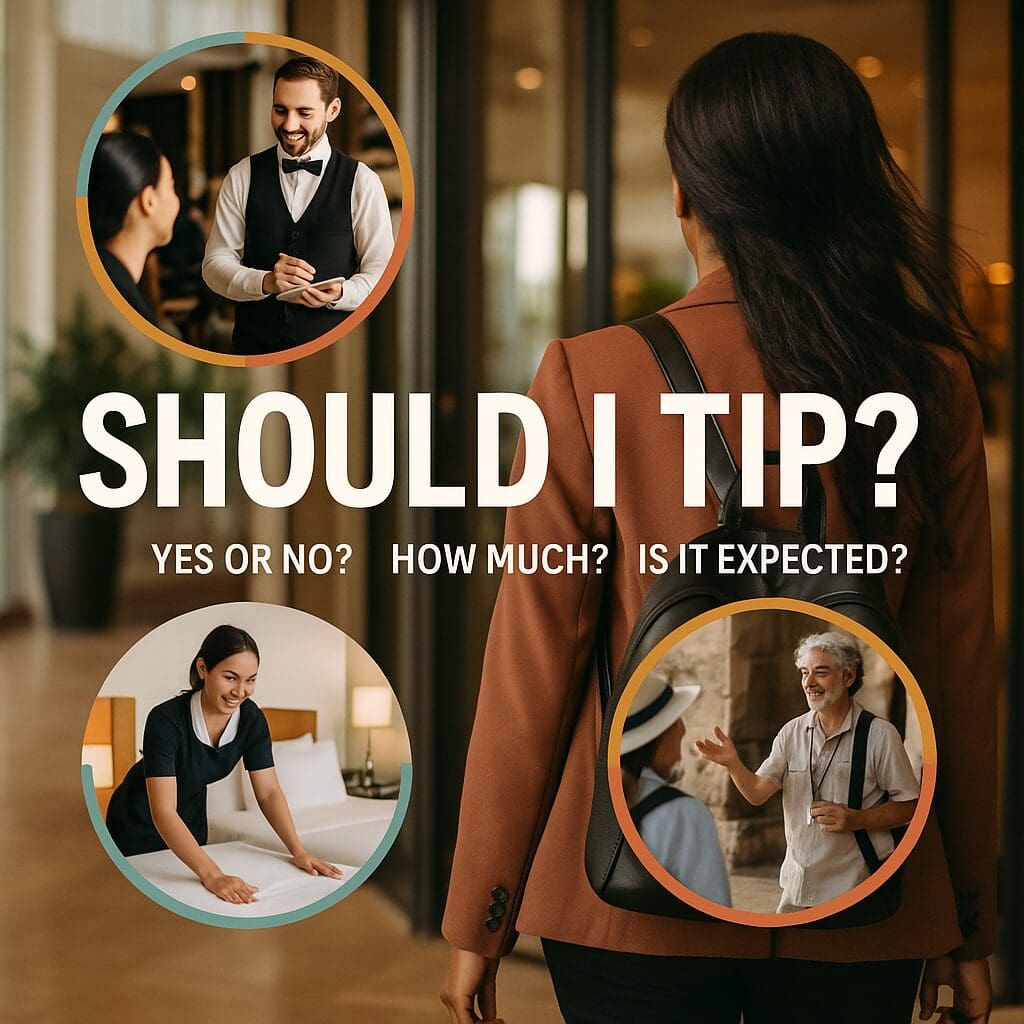
💬 The Vegas Tipping Debate: Room Attendants, Rideshares & Retail Workers
Here’s how it started:
I tip waiters.
I tip rideshare and delivery drivers.
I tip tour guides.
But I traditionally do not tip room attendants—much like I wouldn’t tip the front desk agent or a customer service rep at a store.
My sister looked at me like I had committed a crime.
Her argument:
“Room attendants are low-wage workers doing physical labor. They should be tipped. Their work isn’t a choice—it’s survival.”
My argument:
“But so are retail workers. I worked at Best Buy for years. No one tipped me for helping them connect their entire home theater system!”
So who decides which “service” jobs deserve tips?
Why does the person who makes your bed get a tip, but not the person who checks you in, resolves your issue, or helps you at TSA?
Why does a fine dining server command 18–20%, but the fast-food cashier gets offered a “no tip / 15% / 20% / 25%” screen for handing you a bag?
Who is writing these rules?
And are we following them because they make sense… or because we don’t want to be “that person”?
🤲 “Give, and it will be given to you…” – Luke 6:38 (NIV)
This scripture came to mind as I reflected on the conversation:
“Give, and it will be given to you.
A good measure, pressed down, shaken together and running over,
will be poured into your lap.
For with the measure you use, it will be measured to you.”
It’s a powerful reminder about generosity.
But also:
How much do you give?
How often?
And how do you make it fair, kind, and consistent?
Is generosity something we choose?
Or has it become something we’re shamed into?
🍽️ When Tipping Replaces Good Service
Let me tell you about a recent dining experience…
The waiter seated us.
And then disappeared.
Twenty minutes to ask about drinks.
Another fifteen before taking our order.
Another long gap before the food came.
I was already annoyed when the bill arrived.
My brother didn’t hesitate—
20% tip like clockwork.
Why?
“I don’t want to be that guy.”
I stared at him like… so we’re just out here rewarding bad behavior now?
This is where tipping culture becomes messy:
- You feel pressured to tip even when the service wasn’t good.
- You feel guilty if you don’t.
- You worry about looking cheap.
- You worry about being judged.
- And meanwhile, some of the kindest, most helpful people—like a kind TSA agent who saved you from showing your laundry to the airport—don’t receive anything.
It makes “generosity” feel less genuine and more… required.
🌏 So What’s the Right Answer?
There isn’t one universal rule.
But here are some grounded thoughts:
✅ 1. Know the cultural norms when you travel.
Google tipping etiquette before arriving. What’s generous at home may be excessive abroad.
✅ 2. Consider the service, not the pressure.
Tip for effort. Tip for kindness. Tip for above-and-beyond actions.
✅ 3. Don’t let guilt be your guide.
Generosity loses meaning if forced.
✅ 4. Remember: not all “service” jobs are treated equally.
And that’s part of the problem.
✅ 5. Give from a place of intention.
Not obligation.
🤔 So I’ll ask you…
Do YOU tip room attendants?
Is 20% your standard, or do you adjust based on service?
Does tipping today feel like kindness… or pressure?
Drop your thoughts below—let’s have an honest conversation.
Because the world is changing, culture is shifting, and maybe it’s time we rethink what “service” and “gratitude” really mean.